2021: Get Into The Quarantine Writing Process


For 2021, get into the quarantine writing process while you still have time at home. This year is the perfect opportunity! It’s a new year, but we’re still in quarantine. You can spend more time writing down your ideas, journaling about current events that have severely impacted your life, creating an autobiography, or maybe even penciling together an eloquent love letter in your diary. Either way — spend more time writing.

Writing shorthand helps a lot with processing our thoughts. It helps free up some mind space for other things. Writing is merely getting things off your chest when you want to keep it between you, a document, and the movement of your fingertips, creating words that express a magnitude of emotion.

writing
ideas
writing shorthand
Photo by Eye for Ebony on Unsplash

The Words

Words mean everything. When used recklessly, it’s as if they can cut right through us. Some would say words should be kind and handed out with love and care. I say, they should be honest or (for fiction writers) realistic. They should reflect what you believe and feel in the depths of your soul. It’s still challenging to be vulnerable on paper. Words are powerful and preparing them into a great novel, essay, short story, or poem is a task worth completing at least once in your life. You should start this 2021.

Outline

For the story of your life, even though you know it like the back of your hand, you’ll need an outline. To capture all the times you’ve forgotten, the feelings you had, and the details of the situation that, in hindsight, you may have stumbled right over in your mind.

Outlines help us get, whatever information we’re preparing, organized. We can then spill it on the page after it’s all together properly. Outlining any large piece is like paving a road on untouched land. Making bullet points is often the routine I go to tailor a compelling story on my laptop.

snowflake method
Randy Ingermanson
Photo by Damian McCoig on Unsplash

The snowflake method is a visually creative outline layout. You map out an intricate web that touches on other ideas lurking in the back of our consciousness. Novelist Randy Ingermanson coined this method. Me? I use the playwright Freytag’s pyramid of the seven elements of the plot diagram to dish out my fictional pieces. First, there’s the exposition, then the inciting incident, conflict, rising action, climax, falling action, resolution and denouement, or in other words, the ending.

First Draft

The quarantine writing process requires that we create a first draft. The first run through of anything is usually strange and unusual territory for me. I don’t know about you, but sometimes stories write themselves at the beginning of the writing process. This phenomenon happens when you’re writing, but your imagination seeps from your brain’s crevasses and leaks out onto the document instead of what you thought you’d write. At this point, you’ve already sat down and decided to go through with it.

Writer’s block tends to happen, but don’t worry. You’re not stupid if you can’t get down the first draft very quickly. Creativity comes and goes like the wind. It’s like a breeze that isn’t always able to be caught — but there’s hope when you take the time to create the blueprint.

Yes, it’s messy. Just keep writing!

Revisions

These can be a horrifying nightmare. Don’t stress or feel like this process is in vain. It’s not. Revisions are a part of the writing process. They require us to clean up the draft and polish it. A support team is necessary so that you won’t have to look at the same work a thousand times. But we’ll get to that next. Revisions require breaks between working for the sake of fresh eyes on what you’ve written. Modifications create light at the end of the tunnel.

Revisions
writer's block
clean up draft
Photo by Christa Dodoo on Unsplash

Peer Review

There’s a need to make connections in the literary community. An array of online portals, such as webinars, workshops, and conferences are still available to authors during this pandemic. For the quarantine writing process try swamping work with another author. It’s the easiest, cost-effective way to have someone review your writing. It’s the oldest trick in the book. ‘You scratch my back, and I’ll scratch yours.’ A good writer keeps an editor, agent, proofreader and all other community members in their back pocket.

Tools For The Process

Grammarly: Grammarly is suitable for general spelling and grammar checks. The system is very automated, meaning it doesn’t have the same capabilities as the sophisticated human eye. Oh, and Grammarly is also a coma nazi. Lol!

Auto Crit: Finally, an automated platform for fiction writers! That’s Auto Crit! I must say, for an automation system, this site does a fantastic job analyzing the author’s story. Once the author has purchased a plan and uploads their manuscript, Auto Crit produces an analytical report on the information submitted. It informs the author of their use of repetitive words, measures the pace of the storyline, provides an overall grade point average on the readability of the document, and points out several other factors documented in the manuscript.

Drafts 2 Digital: Thanks to Drafts 2 Digital, my e-books are for sale in various other digital markets. For example, my ebooks are selling on iBooks, Hoopla, Barnes and Nobles’ Nook, Kobo and several other retailers have access to selling my e-books. Go to the website, sign up, upload your document with its cover art and voila!

Amazon KDP: Self-publishing with Amazon couldn’t be easier. Kindle Digital Publishing is a website designed to simplify self-publishing books. I think this is an excellent tool to take advantage of if you have a story you’re dying to tell the world. The author has the choice of publishing in their country and throughout other parts of the world via Amazon. The platform publishes books in print as well.

Well, that’s it for me. Thanks again for reading K.B. Krissy A Write Life.

Visit www.kbkrissy.com and subscribe to my blogs!

The 4-Year-Old Author

Creative Minds Dream Big!

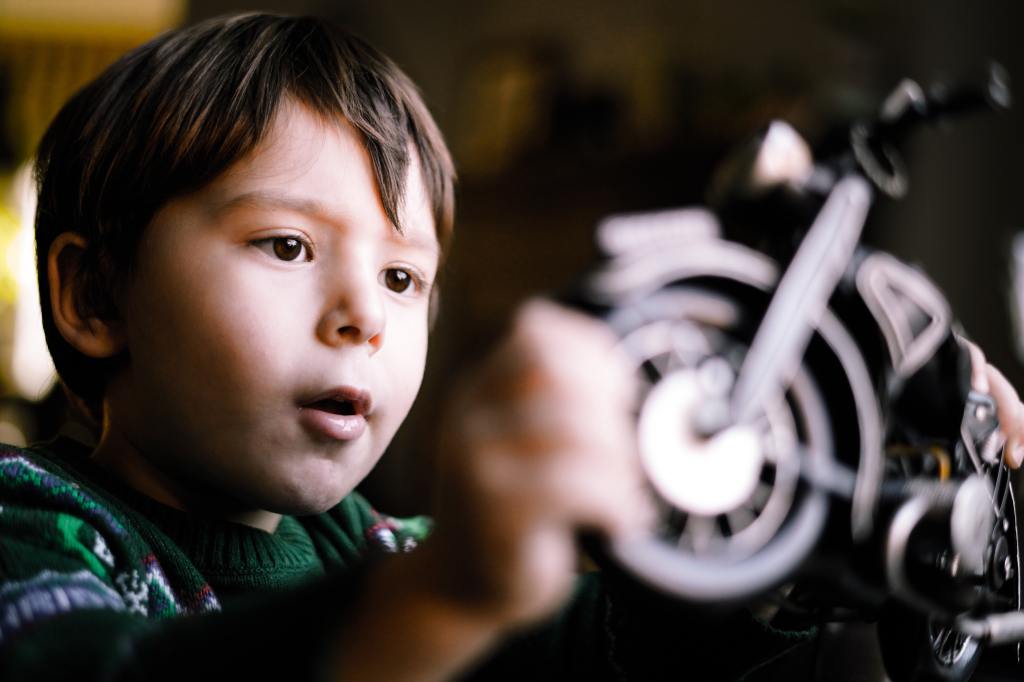
Ever since I first acquired a basic vocabulary, I could piece together stories with my imagination. At the curious age of four years old, creativity ruled me. If I wanted to be the bad guy during child’s play, then I was that. If I wanted to be a pretty princess, then poofI’m the Frog Princess. My thoughts were like trips to another planet. Every day was a different adventure in cartoon land. This is how I knew I was meant to be an author. It’s my job to acquire great ideas and birth them to life for others to see for themselves. Readers are supposed to see written stories in their mind’s vision. They have to be able to picture it, just the way it came to life for me, the author.

Photo by Patrick Fore on Unsplash

As a kid, I spent countless hours daydreaming of a bright future. I imagined my first day of school each year. I thought of all the different scenarios that could happen. Unfortunately, not everything has a happy ending or a compelling climax, but writing fiction means the outcome is whatever the author desires. This is why I believe it’s sometimes easier for me to write novels than it is to just live and breathe in reality. 

A wise person would label the understanding of a child rudimentary, continually pointing out their unforeseen flaws in perception. Yet, there’s something special children have inside them. Their minds are full of endless possibilities due to the unlearned. This is almost like being hopeful during the times when most would predict the inevitable. 

Photo by Ümit Yıldırım on Unsplash

The best thing about children and their imagination is that it actually can be plausible (even by a long shot sometimes). Children have their whole lives to make their ideas tangible. In other words, they have a journey ahead of them to make accomplishments. That’s the difference in children. They don’t forget to believe in what they’re able to envision. While old farts, like me, just have to write about it in books. The beauty of a creative mind is that, if you can think it, then just maybe—it’s attainable.

For more of K.B. Krissy’s blogs provide your email address below. I hope you’ve enjoyed 4-Year-Old Author. Thanks for reading!

The Writer N U

6 Smart Tips For New Authors

If writing is your thing, then these great tips are for you. As an emerging author, I wanted to share some of the essential tidbits I’ve learned throughout my journey with my followers. Every aspiring writer should know the essentials of starting a career as an author. Below are six principles you should follow to be successful in the industry:

1. ) An Inspiration Haven

A writing space is comforting and motivating. It helps to sit up straight and not fall asleep. A person who creates anything needs the freedom to do it—a place where they can be independent of others, yet inspired by their work. Having a space to write is the key that sparks your mental engine, giving you the motivation to drive. Maybe you have a room with all your hard-earned awards in it. Or a picture of the family that you feed is on your desk, right next to your monitor. Suppose you’re very wordy like me. You use post-it notes with a to-do list and motivational quotes written on them. This is great! A lovely space will emerge.

Photo by hannah grace on Unsplash

 In crowds of people, a person can take notes, like in a classroom. A writing space, however, allows your mind to stir is more significant than people give credit. Distance away from our loved ones, away from the phone and other demanding responsibilities, is self-care as well. It’s the space where you have closure from the world. You have the time to ponder and the ability to produce more material.

2.) Read—a lot.

Research is often necessary if you want to make a career in writing. Knowledge is gained by reading books about the craft and how to make it into what you want. These non-fiction books are all over the place. A prominent writer must read just as much or even more than they write. I use the word writer because it’s so broad. Even Steven King, the Godfather of horror, has emphasized this in some of his articles where he advises other authors.

I started liking self-help books when I was in school because psychology was my major in school. Those books always had helpful solutions to problem-solving in them, taking on life as if it were a math equation. Then I fell in love was black literature. It expresses so much culture and reality. I have a vivid imagination and I like to read raw fiction, but not all books carry me away like fiction reading is supposed to do.

Read. Read. Read your favorite authors. Like them on social media and follow their work if it entertains you. If you find creditable resources, then share them with others in your writing. For example, I just finished reading Joanna Penn and Jane Friedman’s work, and they are a great resource to have at our fingertips. Google them and tab their websites for later reads in your spare time. I know spare time only comes once in a blue moon for some, but it’s necessary to read a variety if you want to make a career as any professional writer.

3.) The Community On Social Media

Social media is significant in general. I’m talking about the places where we communicate and give our opinions, meet other people with plans to meet them in person, join social groups, build longevity within a league, buy tickets to book conferences, and reach out to friends to market your work. I’m talking about all that, especially during these COVID times. Social outreach is a step in the right direction.

Writing in itself is an individual task. A smart entrepreneur knows to cast out a net to try to build an audience. It would be best to have followers, influencers, mentors, and everything else that you could potentially grasp from the internet. Connection to the world is important. Your followers make you just as much as you make yourself. They’re your readers. So humble yourself to reaching out to others in the community. That goes for all those like me, who are a bit slower to yield.

Engagement from fans is the best way to be successful in social media. Let someone who doesn’t know you give you kudos for how hard you’re trying to be innovative. They will at least follow you, if not comment. You want the comments, the good, the bad, and the ugly. Then you want to reach back out to them professionally, with minimal stress on your part. Reach for a group that matches you. Search diligently for your next best opportunity and sometimes others will point you in the right direction along the way.

4.) My Editor, My Buddy

Keep an editor in your back pocket. They’re your closest ally in the industry. Praise them just as much as you’d like them to praise you. They’re necessary. For everything you put out on the market for sale, you want some editorial overview that takes place beforehand. I say this in those particular words because editors are expensive. I wouldn’t advise taking the cheap routine and trying to get someone to edit it like a friend or a retired teacher because you could end up disappointed. It’s imperative to look into the few kinds of editors out there and get the exact type you need based on where you are in your career. For first-time authors, I’d say make sure you have a developmental editor and keep them around. Build a long-lasting relationship with your editors, and you’ll be building longevity in your career. Use them often, put them on your payroll, if you can, because they’ll be your partner with every book you put out.

5.) Revisions

I’ve found that modifications can be a rejuvenating polisher for your precious manuscripts. It can also suck at times. It can be tedious. Be prepared for that. It’s not at all that your work sucks or that you’re not a good writer. Revisions are apart of the process. Anything for the mass has to be polished to a tee. Otherwise, you can forget about it. A smart writer wants to make themselves look good every chance they get. So DON’T slack on the revisions.

Time and time again, I rewrote the opening to my first novel. I take constructive critiques and consider other people’s ideas. Their feedback is good because it’s some information that you can analyze and see if that’s what’s needed in your story. It’s good to listen to the people who write in your category. They’re often resourceful.

6.) Passion

When you first had the idea you were going to write a book, did you already know it would take a lot out of you? Writing can be therapeutic, but it requires a patient producer. Yet, it can be fun. Promise. Writing requires you to use your creative skills to develop punchy hooks, tales of forbidden love, and other animations from our imagination. It’s freeing and can be a type of stress relief if you’re truly a writer at heart.

Photo by Kat Stokes on Unsplash

Write just as much, if not, more than you read. There’s no better way to say it. A dedicated author is an avid writer, and many times, it requires researching information, in other words–reading. They go hand-in-hand. While I’m writing, my laptop is my home, and the internet is my television. Use your time wisely when you write. You want to write some, break (or do other things), read a bit, pause, write more, and then fact check with the internet. Spell check your work more than twice, too.

Great insight comes out of nowhere, at times. So, it’s best to jot it down when it comes to you. Let’s say you happen to be driving, then use that good memory to recapture what was so very catching in your thoughts while you were out running errands. Some will advise you to write every day. I say, TRY to write every day, and you’ll probably end up writing every other day. No worries. That’s still good!

If you enjoy these tips and you like to learn more about writing, then visit K.B. Krissy A Write Life and follow me on Medium!

K.B. Krissy

The Write Life

Skip to content ↓